Why I Don’t Trust Underwear Salesmen

Last week I got a call from a friend I hadn’t seen in a while asking me to substitute in her Bunco group that Friday. Because I haven’t been in my new community very long I don’t know a lot of people yet. So even though my friend lives on the other side of St. Louis (about an hour drive from me) I was flattered she’d thought of me and I readily agreed to join in.

Of course if I had been thinking of my history, I might not have been so eager. In May of 1885, Joseph Ramsden arrived in New York on vacation from Manchester, England. A successful businessman, Ramsden set out to explore the city and was delighted when just a day into his vacation he was recognized on the street. A gentleman claiming to be the nephew of the captain of the ship Ramsden had recently arrived on, told the flattered businessman that the captain had spoken well of him.

The new acquaintance, himself a successful manufacturer of women’s undergarments, offered Ramsden a guided tour of Broadway. The two found they had a lot to talk about (I’m guessing mainly women’s undergarments) and Ramsden (unwisely) agreed to accompany the captain’s nephew into a small second-floor office where he claimed he needed to buy a train ticket.

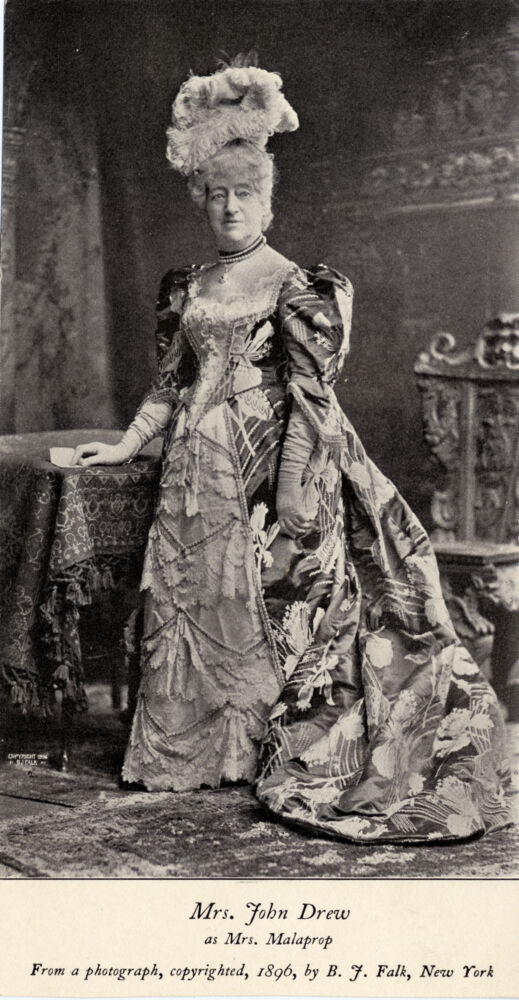
Ladies' underwear advertisement, 1913

As the man dug around in his bag for the money he used to pay the ticket salesmen, he also pulled out items necessary to his business (perhaps samples of women’s undergarments?) to show a fascinated Ramsden. Then at the bottom of the bag, the man happened to discover that he also had a deck of cards. Logically, he showed his latest and greatest card trick to a suitably impressed Ramsden and ticket-salesman.

So the next step was for the ticket salesmen to ask the two new friends if they knew how to play three-card monte, a popular gambling game of the time, sometimes played with a combination of cards and dice. Ramsden (wisely for once) declined the ticket salesman’s invitation to play the game, which prompted the salesman to suggest that perhaps Ramsden didn’t have enough money to play (he may have also called him a chicken). Still Ramsden was (again, wisely) reluctant to play, but as his pride was at stake he (alas, unwisely) took ₤50 from his pocket to prove his worth. That’s when Ramsden’s new acquaintance (who it turned out was neither the captain’s nephew nor a manufacturer of women’s undergarments) snatched the money and ran.

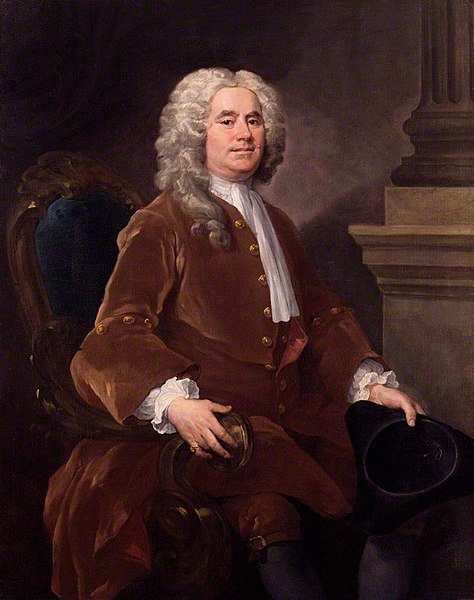
A photo of American confidence and bunco man J...

Do not agree to buy underwear from this man. (Photo credit: Wikipedia)

Ramsden pursued the man to no avail and when he returned to the ticket office, he found only an abandoned room. Joseph Ramsden had been swindled by one of the most famous bunko men of the age, variously known as William Howard, John Astorhouse, Henry Post, Louis Alcaser, Charles Clayton, and most often as “Hungry Joe” Lewis. And Ramsden was in good company with military and political leader John A. Logan and poet and writer Oscar Wilde, both also bunkoed by Hungry Joe.

The game of bunko as it’s played today descended from a game called 8-dice cloth that was a popular social pastime in 18th century England. When the simple dice game arrived in the United States in the 1850’s, it had become a swindler’s game. At first referred to as Banko, the simple dice game merged with the Spanish card game “Banca” (called Monte in Mexico) and became a vehicle for elaborate set-ups designed to swindle money from gullible marks.

It wasn’t long until “bunko” came to refer to any con designed by a “bunko man” and perpetrated on the gullible who found themselves “bunkoed.”Seedy Bunko parlors sprang up all over the nation in the late 19th century and were resurrected in the speakeasies of Prohibition. Bunko men were common and city police departments maintained regular bunko squads to counter the problem.

But even though the bunko of today is essentially a game of chance, it really is more of a social outlet for (primarily) busy ladies (“bunk babes”) who for one night a month can pay $5 to leave their husbands in charge of the kiddos and enjoy a margarita with other busy ladies. If they are the big winner they may even get to take home a kitschy prize.

I am happy to report that my friend has never claimed to be a manufacturer of women’s undergarments (apparently an untrustworthy group of folks) and the invitation I received to play bunko wasn’t an elaborate set-up. I was not, however, the lucky winner when I played. After stringing together more than a dozen low scores in a row, I guess you could say I lost my shirt.

But Bunko has become a much friendlier game over the years. My spectacular loss meant that I went home with a prize, too. Actually as a substitute, I didn’t even have to pay $5 for dues. I think my friend’s group may have been bunkoed.

English: Four coloured 6 sided dice arranged i...

The Practical Historian Learns a New Word

Because even though "blogiversary" remains a made-up word, it's still a thing.

Because even though “blogiversary” remains a made-up word, it’s still a thing.

Exactly one year ago today I posted for the first time on this blog. Unless you’re closely related to me, there’s a pretty good chance you missed it. But I am delighted that there are a few more of you out there now, some even so kind as to offer polite comments and feedback and many with fantastic blogs of your own. And so I wanted to acknowledge and celebrate my first blogiversary (mostly because I love made-up words).

The question is how does a blogger who claims to write about history write with any authority about a form of communication that can only really be traced back to 1994? The word blog itself didn’t crop up until 1999 as a portmanteau (another great word, not made-up) of  “web” and “log” because a webllogging jokester decided to use the phrase “we blog” and it stuck.

Now you could say it’s just gotten plain out of hand with words like vlog (a video blog), travelog (a travel blog), and splog (a spamming blog) seeping into our language. Of course we can all thank Merriam-Webster for this trend.

Now THAT'S a dictionary. Webster's Third New I...

Now THAT’S a dictionary. Webster’s Third New International thankyouverymuch. (Photo credit: Martin Criminale)

Back in 1961, Webster’s Third New International Dictionary hit the bookshelves and boy did it make folks mad. In this edition, editor Philip Gove had the nerve not only to eliminate English words that hadn’t been in use since before 1755, but in doing so he freed up space to include words that were commonly spoken leading up to and into 1961. He even went so far as to include alternate spellings and once wrote in the St. Louis Post-Dispatch that “the basic responsibility of a dictionary is to record language, not set its style.”

He wasn’t wrong, of course. Despite the controversy, Webster’s Third went on to become a respected and widely relied upon resource even if it did contain the word “ain’t.” But I can see the concern. Without a steadfast standard what is to prevent just anybody from making up words willy-nilly (a word that has been more or less in common use since 1610 and that can still be found in Webster’s, tucked between willy-mufty and willy-wagtail).

The truth is that language evolves constantly and so do the ways in which we communicate with one another. What started out as a few escribitionists (a word that has not yet made it into most dictionaries) with online journals, blossomed into thriving online communities of people sharing their thoughts on absolutely anything until even politicians, respected journalists, and hack writers like me decided to get in on the action.

Actually this is not my first blogging experience. Twice during my graduate studies, I was required to establish and maintain edublogs in order to support class reflection and discussion. The first focused on teaching rhetoric in a university setting. I assure you it was not even as exciting as it sounds.

The second was entirely devoted to the life and works of Jane Austen. It included only the most serious of posts like when I offered a reading of Persuasion from the perspective of Avril Lavigne and wrote “Seize upon the scissors” a lot. In case you’ve never read Jane Austen’s personal letters (but who hasn’t?) you’ll have to trust me when I say that is well worth a chuckle or two.

So when I returned to blogging seven years later because a fellow writer insisted that I couldn’t get published without a blog (though like most future bestsellers I’ve yet to get published with one), I really wanted to be sure that I found the right niche that would allow me to write comfortably and consistently.

I decided on history because as a writer of historical fiction I research nitpicky and highly blog-worthy historical details all the time anyway (and that’s the reason I can use the phrase “boat-licker” properly). It seemed like a good fit. Then as I found my blog voice I discovered what I really write is part history (sometimes true, occasionally made-up) and part personal essay (usually true, often exaggerated). I have also been known to throw in a little math and science or food from time to time. And, I’d like to think, a little splash of wit.

So since I’ve been at this a year now, I’m thinking I should come up with a word that accurately describes the type of writing I attempt here in my little corner of the blogosphere. I’m also thinking that it should contain the word blog. Maybe more than once. I’m open to suggestions.

Of Hippos and Submarines

When Lugne Mocumin decided to serve with St. Columba in his mission to spread Christianity to the Picts of Northeast Scotland in the middle of the sixth century, he may have gotten a little more than he bargained for. While on its way to visit with the leader of the Picts, a fellow by the name of Brude, the missionary party headed across Loch Ness.

During the trip, the missionaries spied a group of men on the shore engaged in burying a fallen friend, a victim of the ferocious beast that lived in the depths of the lake. Naturally Columba wanted to help in some way and so he ordered Lugne (who truthfully no one in the group really liked that much anyway) to swim out to retrieve the victim’s abandoned boat.

DSC_1198

Not surprisingly the monster of Loch Ness rose up to attack, but Columba was prepared for that. He calmly made the sign of the cross and said: “Thou shalt go no further, nor touch the man; go back with all speed.” At these words, the monster shrugged and swam away with his serpentine tail between his flippers.

This is the earliest known record of the famed Loch Ness Monster and it comes from Adomnán, the 9th Abbot of Iona who wrote his account about a hundred years after the alleged event. That Adomnán’s distance from the event should be considered when determining the reliability of his account is something even most Nessie enthusiasts (sometimes known as “crazies”) will grudgingly admit.

But the same problem can’t be attributed to the next reported appearance of the monster. After Columba it seems no one heard a peep from the fearsome creature of Loch Ness until just eighty years ago on May 2, 1933 when the Inverness Courier broke the story that a couple of highly reliable witnesses driving a newly completed road along the lake edge had seen, well, something.

The report attracted a great deal of interest (mainly from “crazies”) and soon big game hunter Marmaduke Wetherell was on the job. Hired by the London newspaper Daily Mail, Wetherell soon discovered a set of large footprints. Unfortunately for Wetherell and monster enthusiasts everywhere (still known up until 1959 as “crazies”), the prints belonged to a hippopotamus foot umbrella stand.

Shamed by the exposure of the hoax, Wetherall didn’t give up there and in April of 1934, Colonel Robert Wilson, a respected British surgeon, took a stunning picture of the beast, or perhaps of an otter, or maybe a log. The picture, though hardly conclusive evidence of the presence of a lake monster, appeared authentic and it wasn’t until 1994 that the photo was entirely exposed as a hoax perpetrated in part by Wetherell.

Christian Spurling - Loch Ness Monster (1934)

Christian Spurling – Loch Ness Monster (1934) (Photo credit: luvi)

With the exception of a few cryptozoologists (a term coined in 1959 because nobody could get “crazyologist” to stick) who don’t find this whole hoax theory at all credible, the world was shocked when it was revealed that instead of a genuine lake monster, the picture actually showed a plastic mold mounted on a toy submarine.

So, then, what do we make of the story of St. Columba’s redirection of the murderous beast and Lugne Mocumin’s narrow escape? First, I think we need realize that encounters with toy submarines sprouting plastic heads were most likely an uncommon and alarming sight in the sixth century. Second, from some perspectives a hundred-year-old tale of an encounter with an otter or perhaps a log, paired with an untimely death, can look an awful lot like a lake monster. That is if you happen to be a “crazyologist.”

LOOK!  THE LOCH NESS MONSTER!

LOOK! THE LOCH NESS MONSTER! (Photo credit: Extra Medium)

History Best Served with a Glass of Milk

This week marked the beginning of the main spring fundraiser at my sons’ school. What this means is that my neighborhood has been invaded by an army of adorable door-to-door salesmen. Children packing full-colored brochures full of glossy photos of fresh-baked cookies launch their indefensible attacks every day as they walk home from the bus stop.

And I can’t say no, right? I mean they are peddling 2.7-pound tubs of cookie dough in 22 varieties, most sporting names that make my mouth water. Of course I need giant tubs of cookie dough. I can put them in my freezer and pop out just a little bit to make a small cookie snack. And I’ll have several varieties to make a mix of delicious cookies for a family gathering or an upcoming road trip. That will totally work. I will not sit down in front of the TV with a tub full of cookie dough and a spoon.

Raw cookie dough in cookie clumps.

I could resist it. I work out regularly and more or less watch what I eat. I take care of myself, but I do occasionally tire of listening to the little health nut that lives inside my head. Sometimes I’m ready to let the cookies step in and take over for a while.

I’m guessing that I’m not alone in this experience, and that perhaps, even you, dear reader, have allowed cookie mania to invade your brain from time to time. Actually it occurred to me that this phenomenon is not entirely new in the course of human history, either, and might even be the elusive explanation for a piece of history that isn’t well understood.

English: Tariq ibn Ziyad, muslim general who c...

English: Tariq ibn Ziyad, muslim general who conquered Visigothic Spain; European miniature (Photo credit: Wikipedia)

In AD 711, Berber general Tariq ibn Ziyad invaded the Visigoth-controlled Iberian Peninsula. The Visigoths had been in charge for about 300 years at that point, and rumor has it, no one liked them very much. Making up only a small percentage of the population of the region, the Visigoths most likely ruled with brutal force, but ultimately they had little cultural influence on the region because with no written language of their own, there were very few Visigoth bloggers.

Not a whole lot is known about the invasion outside of a few tales that were most likely constructed many years after the event (by Moorish bloggers, which just like their modern counterparts had the tendency exaggerate, or on occasion even make things up), but one thing that does stick out in the history is that the invasion didn’t take that long. In fact, it was kind of easy. Some tales even suggest that the Berber army was invited into the region by enemies of the Visigoth’s King Roderick.

The invaders killed the king and with the army in disarray, the Iberian Romans seem to have been uninterested in stepping up to defend themselves from their newest conquerors. So as the defeated Visigoths laced up their corsets, donned their trench coats, stained their lips black, and started hanging out behind the high school gymnasium, enter nearly 800 years of rule by the Islamic Moors in the Iberian Peninsula.

Unlike the previous conquerors, the Muslims had an enormous impact on the culture of the region. Today their influence is seen most dramatically in the architecture, art, and bits of language they left behind in Spain. They developed a highly advanced society becoming a world center for education and the exchange of ideas, while making great strides in agriculture, science, and, most importantly, cookies.

This is the one main point that I believe Historians have tended to overlook. No, we don’t have very reliable sources that explain why the Berbers pushed their way into the Iberian Peninsula and we can really only make some good guesses as to why they so easily conquered the ruling Visigoths. What we do know is that this invasion marks the introduction of the cookie (originally developed in Persia) into Europe.

 I don’t know about you, but I find it difficult to resist anyone who brings me cookies, or even the promise of a tub full of cookie dough in imaginative flavors for which I have no recipe, like Extra Chunky Chocolate with Reese’s Pieces. 15 dollars you say? You want to defeat the Visigoths and rule the land, you say? I’m sold. Hand me a spoon.

English: Spoon

French Fashion Accessories: They’re not just for English Nannies Anymore

Jonas with his brolly

Jonas with his brolly (Photo credit: Wikipedia)

In October of 1750, Englishman Jonas Hanway had the nerve to walk through the streets of London carrying an umbrella. To be clear this was well before the umbrella became the preferred mode of transportation for magical English nannies. Though the umbrella had been introduced through much of Europe at the time, it’s most notable use was as a favorite accessory of the more fashionable ladies of France.

Anything that can be referred to as a bumbershoot is probably a little funny anyway. And it certainly doesn’t take much imagination to conclude that an otherwise well-respected Englishman walking down the street sporting the latest in 18th century French ladies’ fashion might draw some attention and (possibly deserved) ridicule.

But why would someone carrying an umbrella in 21st century Oregon deserve a similar reaction? When we relocated to Salem, Oregon a few years ago, we knew that with a 2000 plus mile relocation would come a few small cultural differences. We expected that we might pick up a few new bits of slang in our vocabulary, learn some variations on well-known songs, and maybe stumble on the recipes of some local specialties.

One thing that did surprise me, though, was when I was warned that in this region in which it rains pretty much from November to July, I could expect to be mocked if I used an umbrella. It made a sort of sense, I suppose. Salem rain most often consists of tiny little droplets that swirl around in the air and are more likely to coat than douse and so are difficult to stop with a traditional umbrella.

Still, even when the rain came down harder, more similar to the sheets that fall in the Midwestern springtime, the Oregonians merely pulled their rain jackets tighter, and ran a little faster. Few were willing to take a cue from 18th century French ladies’ fashion. Or common sense.

So now I’m back in St. Louis and it’s April, which means it is storming. The rain comes down in sheets (like rain is supposed to) and when I venture out (and I’m not cowering in my basement under a tornado warning) I carry an umbrella. Because it’s the sensible thing to do. It would have been the sensible thing to do in Oregon as well, but I am sad to say I wasn’t bold enough. When the rain came down in sheets, I pretended to be a native Oregonian and simply pulled my rain jacket a little tighter and ran a little faster.

As for Jonas Hanway, he stayed the course, determined that the umbrella (used by many ancient civilizations) was a sensible and worthwhile idea. Come rain or come shine, he stubbornly carried his favorite and slightly silly-looking accessory through the city streets for nearly thirty years. Eventually the idea caught on and soon enough the men and women of London began carrying umbrellas (for a long time referred to as “hanways”), though it would still be a few years before the bumbershoot would catch on with practically perfect nannies.

Mary Poppins: Umbrella

Mary Poppins: Umbrella (Photo credit: jpellgen)

How I Became a (Mostly) Crazy Fish Lady

This gallery contains 1 photo.

About five years ago, my husband suggested we join the estimated 10 million other American households that maintain at least one aquarium full of fish. I agreed mostly because it seemed easier than getting a dog, but also because I had one of those small 3 gallon hexagonal tanks in my bedroom as a kid […]

A Case of Mistaken Identity

A glass of sparkling champagne in the upward f...

Break out the bubbly…there must be some reason to celebrate!

On September 27, 1947, a telegram arrived at the home of Finnish American Architect Eliel Saarinen announcing that he had been chosen as one of five finalists in the design competition for the Jefferson National Expansion Memorial in St. Louis. A successful and well-respected architect already, Eliel probably seemed like a logical choice and this was no doubt a sweet moment for him. Upon receiving the telegram, the family broke out a bottle of champagne to celebrate.

Spirits were indeed high in the Saarinen household. Then about two hours later a competition official called to explain that a mistake had been made. Eliel’s design had not been selected among the five finalists. That honor had gone, instead, to his 37-year-old son, budding architect Eero Saarinen.

Upon receiving the news, Eliel swallowed any disappointment he might have felt and broke out another bottle of champagne to toast to his son’s success. A few months later the selection committee chose for the memorial Eero’s design, his first major project without his father’s assistance.

And I have to assume that Eliel was (despite any expletives that undoubtedly leapt to his mind at some point) incredibly proud of his son who was following so successfully in his footsteps. Eero Saarinen would go on to design such major projects as Washington Dulles International Airport, the US Embassy buildings in London and Oslo, the TWA flight center at JFK Airport, and many, many others. But it all started with that simple arch that gives the relatively small city of St. Louis, Missouri one of the most recognizable skylines in the world.

St. Louis on the Mississippi river by night. J...

It really does just seem right.

With his design, Eero Saarinen set out not only to commemorate Thomas Jefferson, the Louisiana Purchase, and the beginning of national westward expansion, but also to mark his own time with a wholly unique structural form. In his own words, “at the edge of the Mississippi River, a great arch…seemed right.”

He’s not entirely wrong. Growing up within a couple hour radius of St. Louis and now returning to the area as an adult, I agree that something about the Arch just seems right. One can look up at it and almost imagine Lewis and Clark pulling out a pair of comically oversized scissors and snipping an expansive red ribbon before marching through the world’s largest croquet wicket to begin their westward journey.

But Eero Saarinen misspoke, too, because the Gateway to the West is not, in fact, an arch at all. As many know-it-alls can tell you, the Arch is actually a modified inverted catenary curve. In case you don’t remember everything you learned in high school trig class (though I’m sure you do), a catenary curve is the shape made when a chain is suspended from two points and allowed to hang freely. It looks a little like a parabola (but it’s not) and if you turn it upside down and modify it to have thicker bases and a narrower top, then you have the shape of the St. Louis “Arch.”

Of course this only matters to a handful of know-it-alls. One of those happens to be my dad who worked for many years as everyone’s favorite high school geometry and trigonometry teacher. Go ahead and ask me the definition of a function (just be warned that I’ll have to sing it to you to the tune of “The Battle Hymn of the Republic”).

As it turns out, it also mattered to the first boy I ever brought home from college to meet my parents. Somehow the subject of the Arch came up in conversation and my relatively new know-it-all boyfriend said, “Well, of course, really it should be called the Gateway Inverted Catenary Curve.” It seems the boyfriend knew his audience. I’m pretty sure he would have eventually impressed my dad anyway (this know-it-all boyfriend is now my know-it-all husband and the two of them get along splendidly), but there’s little doubt in my mind that it was love at first catenary curve.

This was also true for the committee charged with choosing the design for the Jefferson Memorial. The vote was unanimous in favor of Eero Saarinen’s design because it just seemed right and for most of us, whether you call it an inverted catenary curve or an arch doesn’t really matter. Just make sure you call the right architect.

Saarinen working with a model of the arch in 1957